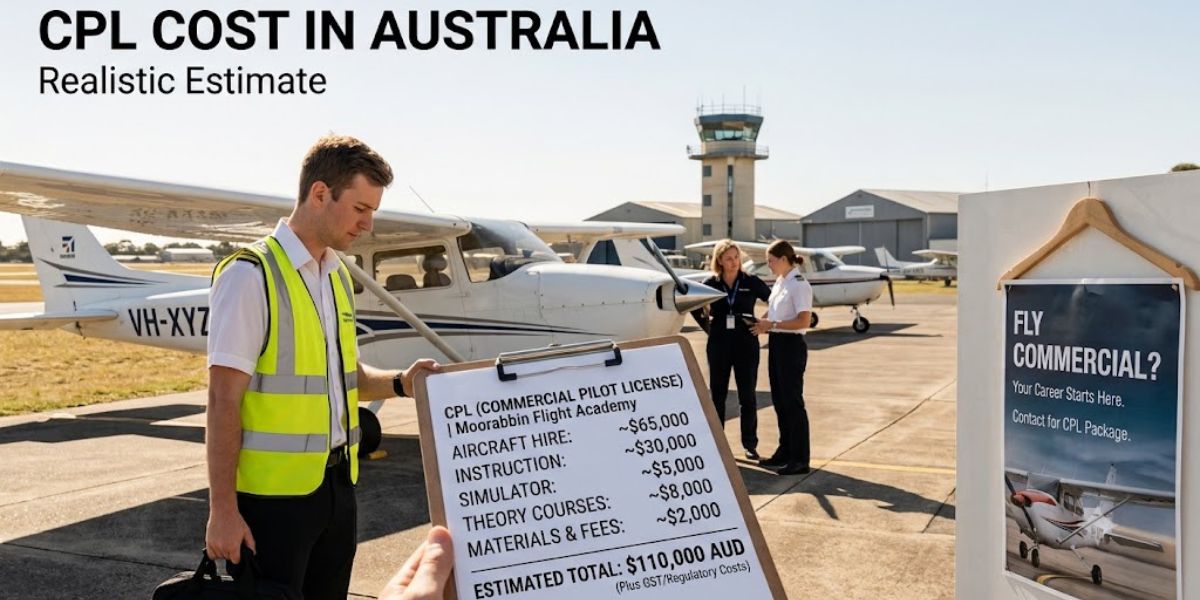
Becoming a commercial pilot in Australia is a significant financial and personal commitment. Whether the goal is flying for a regional airline, a charter operator, or eventually a major carrier, understanding the true cost of obtaining a Commercial Pilot Licence (CPL) helps aspiring aviators plan realistically rather than being caught off guard by hidden fees along the way. Training costs vary widely depending on the flight school, aircraft type, training pathway, and location, but this guide breaks down the typical expenses, the pathways available, and answers to the most common questions people have before starting flight training.
In Australia, the Civil Aviation Safety Authority (CASA) regulates pilot training and licensing. Most people pursuing a career as a professional pilot progress through a series of licences and ratings rather than jumping straight to a CPL. The typical pathway looks like this: Recreational Pilot Licence or Private Pilot Licence, followed by additional endorsements and hours, and ultimately the Commercial Pilot Licence, often combined with an instrument rating and sometimes a multi-engine endorsement. Each stage carries its own costs, and students often choose to bundle training into an integrated course or build it up gradually through a modular, pay-as-you-go approach.
Integrated courses are full-time, structured programs delivered by CASA-approved flight training organisations, often linked to a diploma or aviation degree. They are generally more expensive upfront but are designed to take a student from zero experience to a CPL (and sometimes an Air Transport Pilot Licence pathway) in a fixed timeframe, often 12 to 18 months. Modular training, by contrast, allows a student to complete each stage separately, sometimes over several years, which can spread out costs but may end up costing more overall due to currency requirements, re-familiarisation flights, and administrative fees at each stage.
Most CPL candidates start here. A PPL typically requires a minimum of 40 hours of flight time under CASA regulations, though most students take longer to reach the required proficiency. Costs for a PPL in Australia generally range from AUD 15,000 to AUD 25,000, depending on the flight school, aircraft type, and how quickly the student progresses.
CASA requires a minimum of 150 hours total flight time for a CPL if training is completed through an approved integrated course, or 200 hours if pursued through the general (modular) pathway. Because most PPL graduates have only around 40 to 60 hours, a significant number of additional hours must be logged before CPL training and testing can be completed. Building these hours can cost anywhere from AUD 200 to AUD 500 per hour depending on the aircraft, so this stage alone can add AUD 20,000 to AUD 50,000 or more.
The CPL course itself, covering the specific commercial training syllabus, exams, and flight test, typically costs between AUD 15,000 and AUD 30,000 on top of the hour-building costs, depending on whether it is bundled into an integrated program or completed as a standalone modular course.
Most employers expect a CPL holder to also carry an instrument rating, which permits flight in instrument meteorological conditions. This typically adds another AUD 15,000 to AUD 25,000, depending on whether it is a single-engine or multi-engine instrument rating and how many hours are required to reach proficiency.
Many commercial roles, particularly with regional airlines, require multi-engine experience. A multi-engine endorsement can cost between AUD 5,000 and AUD 10,000, depending on the aircraft type used and the number of hours completed.
Beyond flight training fees, students should budget for several additional expenses that are easy to underestimate:
When all stages are combined, from zero flying experience through to a CPL with instrument rating and multi-engine endorsement, most students in Australia spend between AUD 80,000 and AUD 150,000. Integrated academy programs at the higher end, particularly those affiliated with universities or major airline cadetships, can range up to AUD 180,000 or more when accommodation, additional simulator time, and degree-level tuition are included. Modular, self-paced training can sometimes be completed at the lower end of this range, but often takes considerably longer and carries the risk of additional currency or re-training costs if gaps appear between flying sessions.
Given the size of this investment, many aspiring pilots look for ways to reduce or spread the financial burden. Options include:
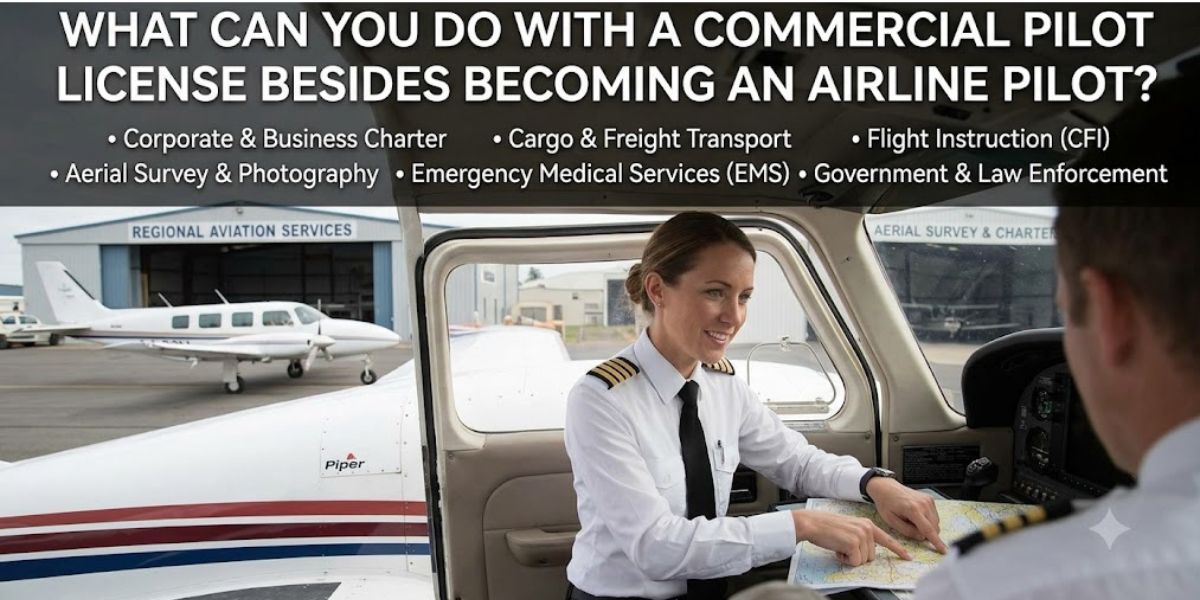
While the upfront cost is substantial, a CPL opens the door to paid flying roles such as charter work, aerial mustering, flight instructing, or first officer positions with regional airlines, all of which can help build hours toward an Air Transport Pilot Licence (ATPL), the qualification required for command roles with major airlines. Many pilots view the CPL investment as the first step in a longer career progression, with flight instructing being a particularly common way to accumulate paid hours immediately after licensing.
Most students spend between AUD 80,000 and AUD 150,000 from the start of training through to a CPL with instrument rating, though integrated academy or cadetship programs can cost up to AUD 180,000 or more.
CASA requires a minimum of 150 hours for integrated course graduates or 200 hours under the general modular pathway, though most students log additional hours beyond the legal minimum before they are ready for the CPL flight test.
Modular training can be cheaper on paper since it is paid for in stages, but it often takes longer, and gaps between flying sessions can lead to extra currency or refresher costs. Integrated courses cost more upfront but are structured to minimise inefficiencies.
It is not legally required to hold a CPL, but most employers, especially regional airlines and charter operators, expect candidates to have an instrument rating, so most students complete one as part of their overall training plan.
Some CASA-approved integrated diploma or degree-level aviation programs are eligible for FEE-HELP or similar government loan schemes, though eligibility depends on the specific provider and course structure, so it is worth checking directly with the flight school.
Integrated full-time courses typically take 12 to 18 months. Modular training completed part-time or around work commitments can take anywhere from two to five years, depending on how consistently a student is able to fly.