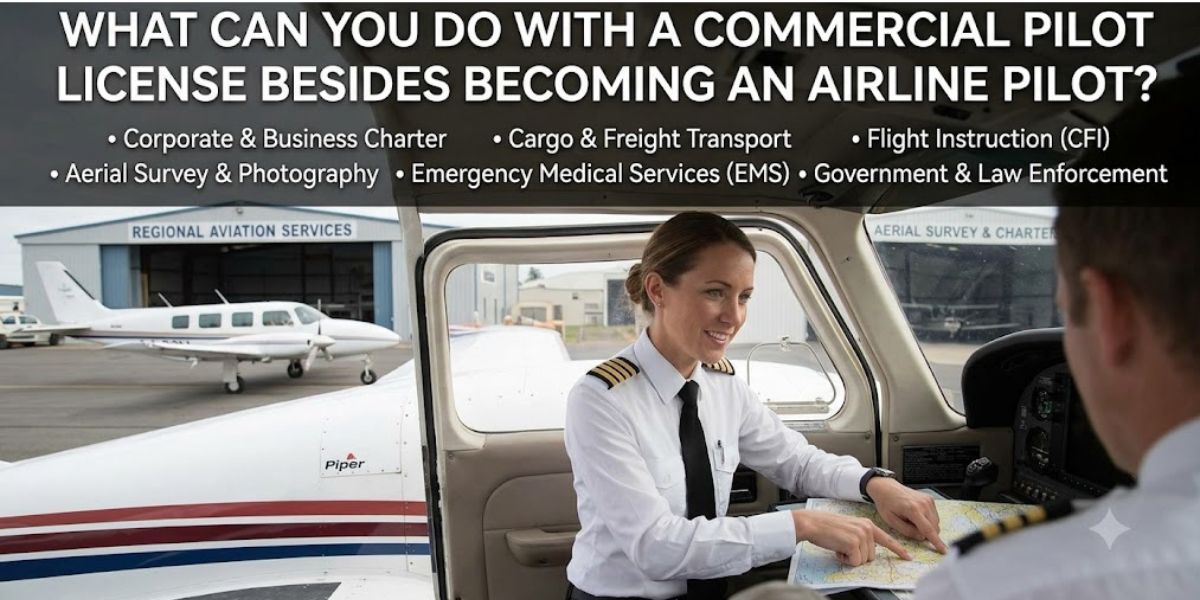


Getting a Commercial Pilot License (CPL) is usually observed as the ticket to the airlines but that’s really just one of the various roads it open up. The CPL is the certificate that excludes the FAA’s limitation on getting paid to fly. It does not bound you into a single career track. Commercial pilots actually work around a variety of sectors that includes charter and skydiving operations along with cargo, corporate aviation and flight instruction. If you have gained your CPL or are working towards receiving one and airline life does not interest you, take a look at the below directions you can take.
Becoming a Certified Flight Instructor is one of the most often chosen non airline paths and for good reason. Guiding allows you to develop flight hours while getting paid for teaching new students the basics of flying from basic maneuvers to instrument process and emergency handling. It is also a brilliant move: hours logged as an instructor count toward the experience required for an Airline Transport Pilot certificate afterwards so even pilots who wish to do an airline job can start here.
Charter pilots fly passengers on-demand rather than on fixed schedules, often in smaller aircraft to regional airports that major airlines don’t serve. This kind of on-demand flying means no two days look the same, you might fly a different route with a different set of clients every time out, which appeals to pilots who want variety and a more entrepreneurial feel to their work.
Corporate pilots fly for companies that own their own aircraft, transporting executives and staff for business travel. Corporate pilots typically handle more than just flying the plane itself, fueling, coordinating maintenance, and other responsibilities that keep operations running smoothly. This path tends to offer more predictable routes and clients, along with a close-knit working relationship with the company you fly for.
Not every pilot job involves passengers. Cargo pilots move freight, mail, and goods for shipping companies, often flying overnight routes. It’s a solid niche for pilots who prefer working with logistics rather than customer service, and cargo carriers frequently offer a path toward larger aircraft and more senior roles over time.
Aerial photography and survey work involves flying small planes with cameras mounted to the wing, a specialized skill used to map pipelines, monitor crops, and photograph real estate developments. It demands precision: pilots need excellent altitude control and the patience to hold a steady line for extended periods.
Agricultural flying involves spraying fertilizer, pesticide, or seed over farmland, often at very low altitudes. It’s physically and mentally demanding work that requires sharp reflexes and comfort flying close to the ground, but it’s also one of the more lucrative niche paths for pilots who develop the specialized skill set.
Banner towing, pulling advertising banners over beaches, stadiums, or events, demands low-altitude precision over crowded areas. It’s often a seasonal gig, popular in coastal towns during summer months, and a good way for newer commercial pilots to build hours while getting comfortable with precision flying.
Pilots who fly for skydiving centers are responsible for taking jumpers up to altitude (often 10,000+ feet) and repeating the climb multiple times a day. It’s a fast-paced job with quick turnaround times between flights, ideal for pilots who enjoy a high volume of short flights rather than long-haul routes.
Patrol pilots fly low-altitude routes along pipelines or powerlines, visually inspecting infrastructure for damage or encroachment. It’s steady, repetitive work often done for utility or energy companies, and it’s a reliable niche for pilots who prefer routine flying over variety.
Some commercial pilots go on to fly for wildfire suppression operations, dropping water or fire retardant over active fires. This is high-stress, high-stakes flying that usually requires additional specialized training beyond the CPL, but it’s a respected and impactful career path.
Air ambulance pilots transport patients and medical teams, often under tight time pressure. This is one of several careers open to commercial certificate holders beyond the airlines, alongside options like air taxi, cargo, and law enforcement flying. It’s meaningful work for pilots who want their flying to have a direct, tangible impact.
Police departments, border patrol, and other government agencies employ commercial pilots for surveillance, pursuit support, and transport. These roles often come with additional background checks and training requirements but offer stable, mission-driven careers.
Ferry pilots relocate aircraft from one location to another, for sales, maintenance, deliveries, or repositioning. It’s a flexible, often freelance-style job that appeals to pilots who enjoy variety in aircraft types and routes rather than a fixed schedule.
Traffic reporting pilots fly set patterns over cities, relaying live traffic conditions to radio and TV stations. It’s steady, predictable flying that suits pilots who like a consistent routine and don’t mind repetitive airspace.
A pilot license can open doors well beyond commercial airlines, including instruction, charter flying, business aviation, cargo, and emergency medical roles and each path comes with its own lifestyle, training demands, stress level, and income profile, so it’s worth matching the job to what you actually want out of your flying career, not just the most obvious option. Many pilots also mix and match, instructing part-time while flying charter, or moving from banner towing into corporate aviation as they build hours and experience.
It depends on the role. Flight instructing requires a separate Certified Flight Instructor (CFI) certificate. Corporate and charter flying may require a multi-engine rating or a type rating for specific aircraft. Agricultural and firefighting work often requires specialized operational training beyond the base commercial certificate.
Corporate aviation, agricultural flying, and certain specialized operations (like firefighting or offshore/helicopter work) tend to pay well once you have experience, though salaries vary widely by region, aircraft type, and employer. Entry-level roles like banner towing or instructing typically pay less but are valuable for building flight hours.
Yes. Many pilots use non-airline jobs specifically to build flight hours and experience before eventually pursuing an airline career, since most of these roles count toward the total flight time needed for an Airline Transport Pilot (ATP) certificate.
It’s one of the most popular first jobs precisely because it lets new pilots earn money while accumulating hours, and it sharpens your own flying skills through the process of teaching others.
Many do, especially charter, corporate, cargo, and air ambulance work, since these often involve flying in varied weather conditions. Agricultural flying, banner towing, and some patrol work may not require it, but having one generally makes you more employable.
Some are. Banner towing and skydiving operations are often seasonal, especially in warmer climates, while agricultural flying tends to follow planting and harvest cycles. Charter, corporate, and cargo work are typically full-time, ongoing positions.
Flexibility and variety. Many of these roles offer more control over your schedule, aircraft type, and work environment compared to the rigid seniority-based structure of major airlines, while still building meaningful flight experience and income.