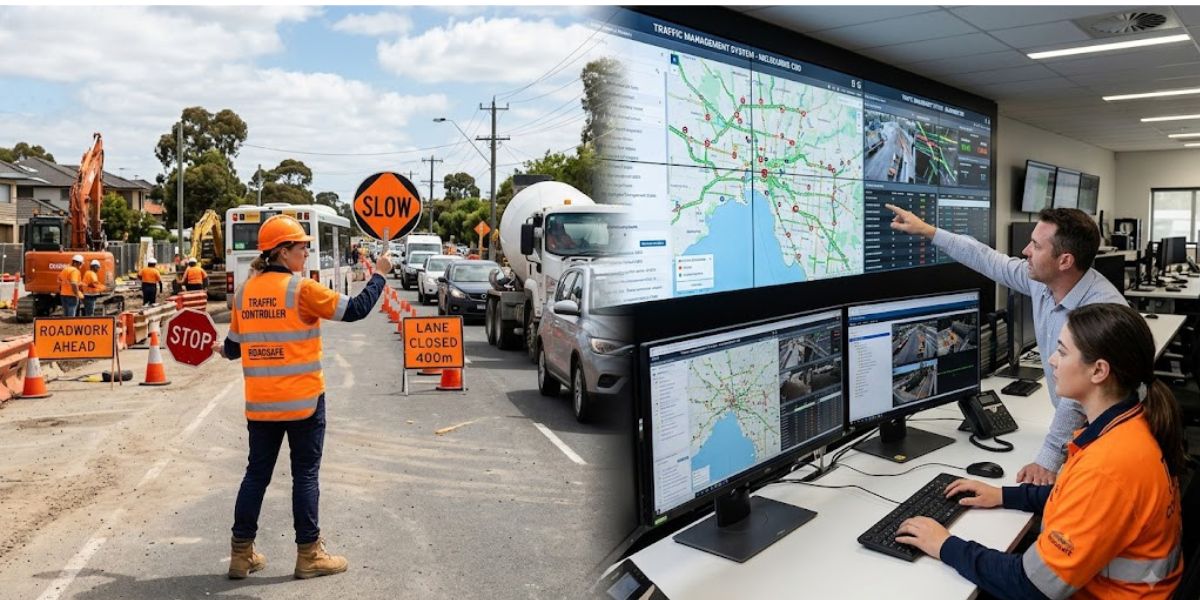


Traffic control is one of the physically demanding and safety specific roles on any road worksite. Traffic controllers have the responsibility of directing vehicles and pedestrians alongside machinery through active work zones usually in environments where speed and poor visibility along with heavy equipment and human error come together to create real risk. Due to the nature of the job, there is a common question that employers and job seekers ask is whether traffic controllers are needed to hold first aid training.
This guide discusses the legal needs and industry expectations alongside practical reasons why first aid training is important and suggested and in a lot of cases effectively significant for someone working in traffic control.
Before addressing first aid specifically, it’s important to understand the baseline qualification for traffic controllers. In most jurisdictions, individuals must complete an accredited traffic control course to legally direct traffic on public roads or worksites. This typically includes units such as “Control traffic with a Stop-Slow bat” and “Implement traffic management plans,” delivered through a Registered Training Organisation (RTO). Successful completion results in a nationally recognised traffic control ticket or card, which must usually be renewed periodically.
This core qualification focuses on traffic management principles: reading traffic control plans, using signage and equipment correctly, communicating with drivers and site personnel, and understanding relevant road rules. However, this qualification does not automatically include first aid training as a mandatory component in every state or territory, which is where confusion often arises.
The legal answer varies depending on jurisdiction, employer policy, and the specific worksite. In general terms, work health and safety (WHS) legislation across Australia and similar frameworks internationally require employers to ensure an adequate number of trained first aiders are available at any workplace, based on the size of the workforce, the nature of the risks involved, and the remoteness of the site from emergency services.
For high-risk environments and road construction or traffic control zones are typically classified as such due to the presence of moving vehicles, heavy machinery, and vulnerable workers standing in close proximity to traffic, WHS regulators often expect a higher ratio of first aid-trained personnel than in a standard office environment. This means that while first aid training may not be an explicit, named prerequisite to obtain a traffic control ticket, it is frequently required as a practical matter to satisfy an employer’s broader WHS obligations.
In many cases, principal contractors and head contractors on civil construction or roadworks projects will stipulate in their site induction requirements or subcontractor agreements that all site personnel, including traffic controllers, must hold a current first aid certificate. This is especially common on larger infrastructure projects where the consequences of delayed emergency response are more severe.
Even where not strictly mandated by law, there are strong practical reasons why traffic controllers benefit from holding first aid qualifications.
Traffic controllers work at the frontline of some of the most hazardous zones on any worksite. Vehicle strikes, collisions, and equipment-related injuries can occur suddenly, and traffic controllers are often the first witnesses and sometimes the first responders, to any incident nearby. Having first aid skills allows them to provide immediate assistance before paramedics arrive, which can be critical in situations involving severe bleeding, fractures, or loss of consciousness.
Many roadworks and traffic control jobs take place in regional or isolated locations where emergency response times can be significantly longer than in urban areas. In these settings, having on-site personnel trained in first aid, including CPR and basic trauma management, can make a meaningful difference to patient outcomes while waiting for professional medical help to arrive.
Traffic controllers are frequently exposed to extreme weather conditions, including heat stress and dehydration in summer months, and cold exposure in winter. They may also encounter hazards such as dust, fumes from vehicles and machinery, and physical strain from standing for long periods or holding equipment such as Stop-Slow bats. First aid training equips workers to recognise the early signs of heat stroke, hypothermia, or exhaustion in themselves and colleagues, enabling faster intervention.
Beyond regulatory compliance, many labour hire companies, civil contractors, and traffic management companies prefer or require candidates to hold a current first aid certificate as a condition of employment. This is partly driven by insurance and liability considerations, having trained staff on-site can reduce the severity of incidents and demonstrate due diligence in the event of a workplace injury claim.
A standard first aid course suitable for traffic controllers usually covers:
Courses are typically delivered over one day for a standard certificate, with refresher or update courses required every one to three years, depending on the certifying body and specific unit of competency completed. Some traffic management companies also encourage or require additional units such as remote area first aid or provide first aid in an education and care setting, depending on the nature of the worksite.
For those entering the traffic control industry, it is generally advisable to pursue both qualifications together rather than treating first aid as an afterthought. Many Registered Training Organisations such as Pal Education that offer traffic control tickets also offer first aid courses, sometimes as bundled packages, making it convenient and cost-effective to complete both within a short timeframe. Job seekers who hold both qualifications tend to be more competitive candidates, as employers can deploy them across a wider range of sites without needing to source additional first aid-certified staff.
It is also worth checking with prospective employers or recruitment agencies about their specific requirements before enrolling in training, as some companies may have preferred providers or specific units of competency they require, particularly for government infrastructure projects or major road authorities.
While first aid training may not be universally mandated as a strict legal prerequisite to becoming a traffic controller, it is increasingly treated as a practical and often contractual necessity across the industry. Given the high-risk nature of traffic control work, proximity to vehicles, exposure to environmental hazards, and the potential for serious incidents holding a current first aid certificate significantly enhances a traffic controller’s ability to respond effectively to emergencies, improves employability, and helps employers meet their broader work health and safety obligations. For anyone considering a career in traffic control, investing in first aid training alongside a traffic control ticket is a sound and often expected step toward becoming a safer, more capable, and more employable worker.
First aid training is not always a named legal prerequisite for obtaining a traffic control ticket itself. However, work health and safety laws generally require employers to have an adequate number of trained first aiders on-site based on risk level and workforce size, which often means traffic controllers are required to hold first aid certification as part of broader workplace compliance.
A standard first aid certificate covering CPR, wound management, fractures, shock, and environmental illnesses is generally sufficient. Some employers may also request additional units such as remote area first aid for isolated worksites.
Most first aid certificates are valid for around three years, while CPR components typically need to be refreshed annually. Requirements can vary depending on the certifying body and jurisdiction, so it’s important to check specific expiry timelines.
Yes, many Registered Training Organisations offer combined or bundled packages that include both a traffic control ticket and a first aid certificate, often completed over consecutive days for convenience and cost savings.
It is possible to find work without a first aid certificate in some cases, particularly on smaller or lower-risk sites. However, many employers and principal contractors prefer or require candidates with both qualifications, so lacking first aid training may limit job opportunities, particularly on larger infrastructure or government projects.
Traffic controllers work in close proximity to moving vehicles and heavy machinery, often in remote locations with longer emergency response times. This combination of high-risk exposure and potential delays in professional medical assistance makes on-site first aid capability especially valuable in this role.
Yes, in most cases the same workplace safety expectations apply regardless of employment status. Casual and part-time workers are exposed to the same on-site risks as full-time employees, so employers typically expect the same first aid qualifications from all traffic control personnel.