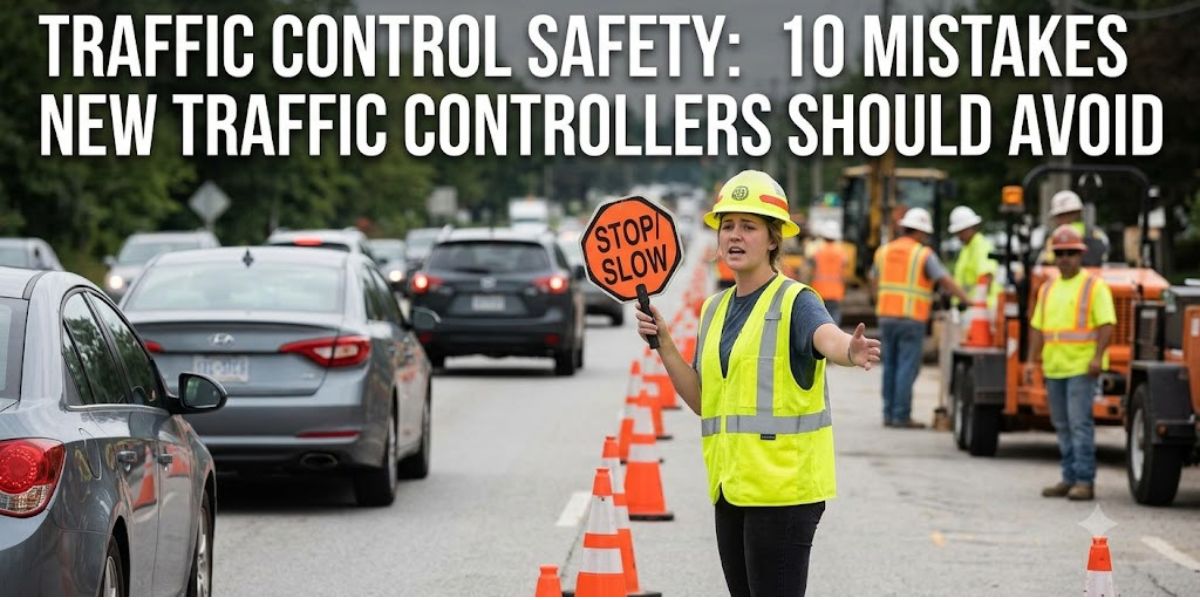

Traffic control is one of the most safety crucial roles on any road construction site or event management operation. Traffic controllers sometimes known as traffic marshals have the responsibility of directing vehicles and pedestrians along with machinery safely through areas where normal traffic flow has been damaged. Even a small gap in attention or a minor procedural mistake can lead to serious accidents or injuries both for the traffic controller and for road users.
For new traffic controllers, the learning phase can be difficult. Rules and signals along with positioning and communication protocols must become second nature quickly. This is because on a live worksite there is no chance of hesitation or making mistakes.
This guide discusses ten of the most common mistakes new traffic controllers make along with explaining why these mistakes are dangerous and how you can avoid them.
Work zones and temporary traffic control areas are inherently unpredictable environments. Drivers may be distracted, unfamiliar with the diverted route, traveling at inappropriate speeds, or simply not paying attention to signage. The traffic controller acts as the critical human link between the chaos of moving vehicles and the safety of workers, pedestrians, and the traveling public. Because of this responsibility, even experienced controllers must remain vigilant, and new controllers in particular need structured guidance to avoid common and often preventable errors.
One of the most frequent mistakes among new traffic controllers is choosing a standing position that does not give drivers enough time to see and react to their signals. Standing too close to a blind curve, behind an obstruction, or in a poorly lit area drastically reduces a driver’s reaction time. Controllers should always position themselves where they are clearly visible from a safe stopping distance, ideally in a location with good sight lines in both directions and adequate lighting during low-visibility conditions.
High-visibility clothing, including reflective vests, is not optional safety equipment, it is a fundamental requirement. New controllers sometimes wear gear that is faded, torn, dirty, or improperly fitted, all of which reduce visibility to approaching drivers, particularly at night or in poor weather. Gear should be inspected regularly and replaced when it no longer meets reflectivity standards.
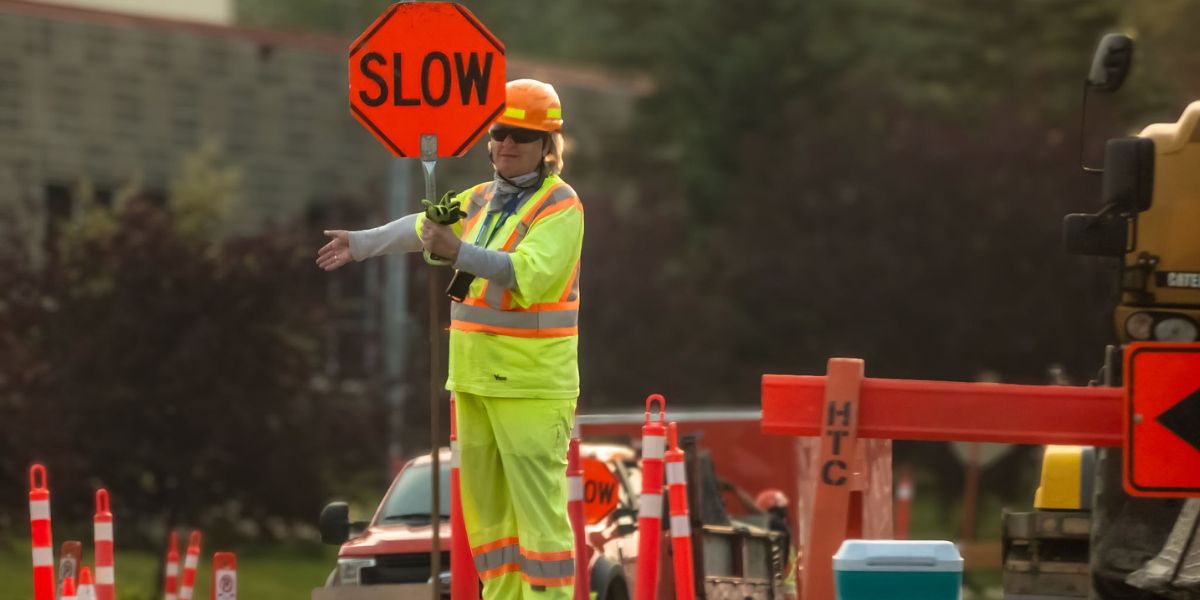
Traffic control relies heavily on standardized hand signals and the correct use of STOP/SLOW paddles. New controllers sometimes use ambiguous gestures, inconsistent paddle positioning, or signals that do not match standard traffic control manuals. This can confuse drivers, especially those unfamiliar with work zone procedures, and increases the risk of a vehicle proceeding when it should stop, or vice versa. Consistent, deliberate, and clearly visible signaling is essential.
Eye contact is a simple but often overlooked technique that confirms a driver has seen and understood the controller’s instruction. New controllers may focus solely on giving the correct hand signal without checking whether the driver has acknowledged it. Without this confirmation, a controller cannot be certain that a vehicle will actually stop or slow down as instructed.
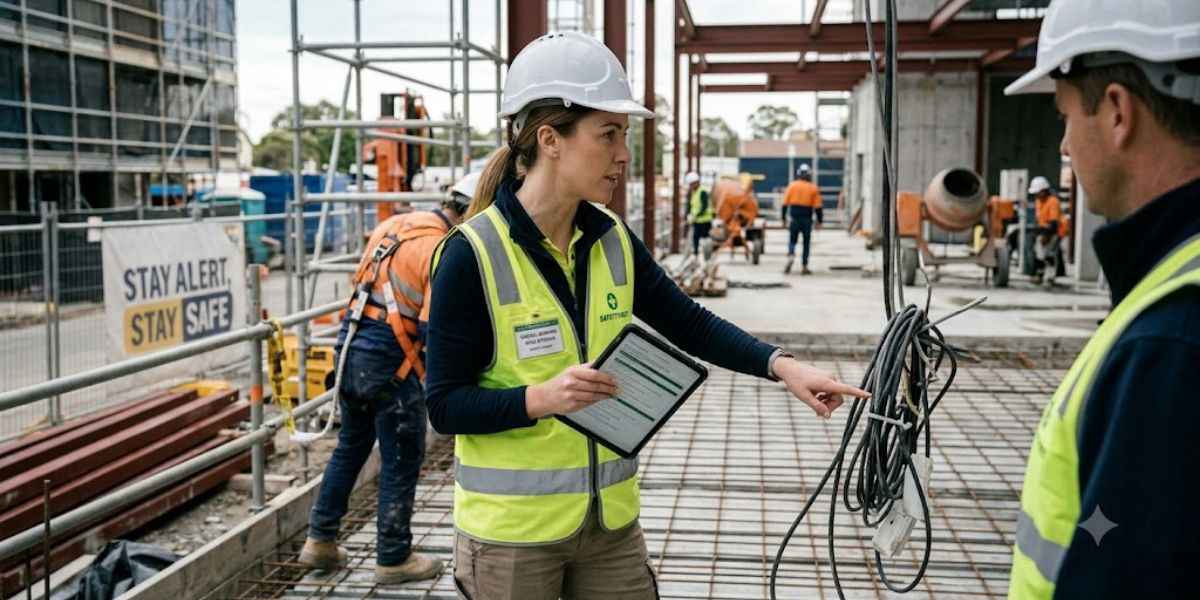
On larger sites, multiple traffic controllers often work together to manage traffic flow through a work zone. A common mistake among new controllers is failing to maintain clear communication with colleagues, whether through radios, hand signals, or established protocols. Miscommunication between controllers at opposite ends of a single-lane closure, for example, can result in vehicles being released from both directions simultaneously, creating a head-on collision risk.
New controllers sometimes underestimate how much distance a vehicle, especially a truck or heavy vehicle, needs to stop safely. Signaling a vehicle to stop too late, without accounting for its speed and stopping distance, can force sudden braking or result in the vehicle being unable to stop in time. Controllers must be trained to judge approaching vehicle speeds and give signals early enough to allow safe stopping.
Distraction is a leading cause of traffic control incidents. New controllers may be tempted to check their phones, engage in extended conversations, or lose focus during quiet periods with little traffic. However, traffic conditions can change in seconds, and a momentary lapse in attention can be enough for an incident to occur. Maintaining constant situational awareness throughout a shift is non-negotiable.
Rain, fog, glare, and darkness all significantly affect how well drivers can see a traffic controller and their signals. A common mistake is failing to adjust positioning, signaling techniques, or the use of additional lighting and signage when environmental conditions deteriorate. Controllers should be trained to recognize when conditions require additional precautions, such as increased signage, warning lights, or even temporarily halting traffic control activities if conditions become too hazardous.
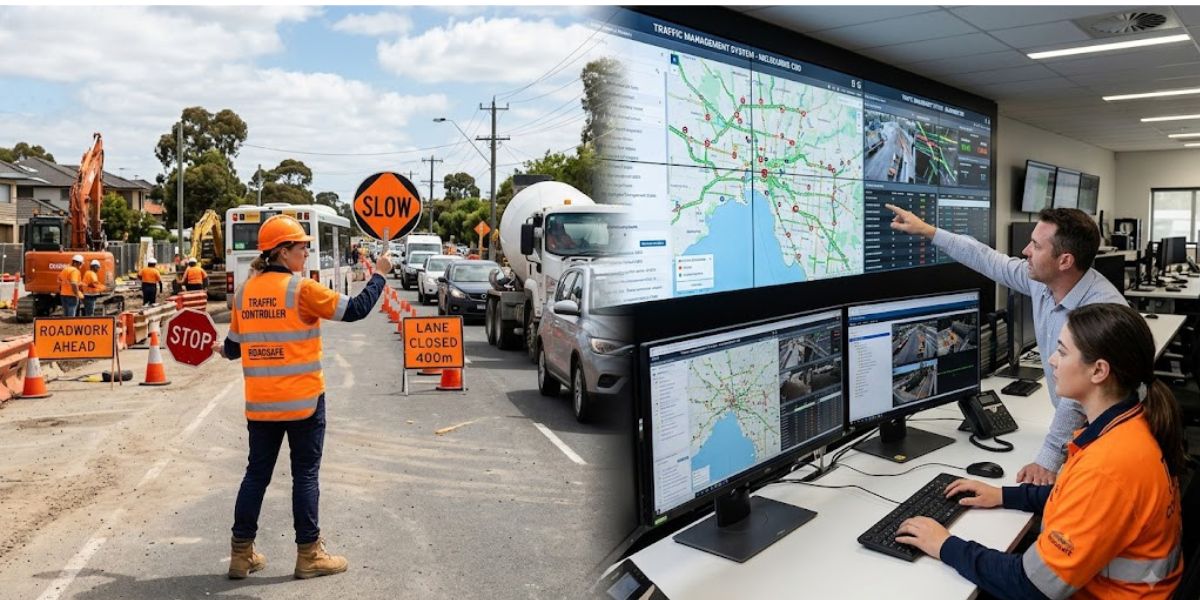
Every work site should operate under an approved Traffic Management Plan (TMP) that outlines signage placement, controller positioning, lane closures, and emergency procedures. New controllers sometimes deviate from this plan, either due to lack of familiarity with the document or because they assume minor adjustments are harmless. Any deviation from the approved plan should only occur with proper authorization, as unplanned changes can create unsafe and legally non-compliant conditions.
Finally, many new controllers hesitate to report near-misses, equipment faults, or unsafe site conditions, often due to inexperience or fear of drawing attention to a mistake. However, near-miss reporting is one of the most valuable tools for improving site safety, as it allows supervisors to identify and correct hazards before a serious incident occurs. A strong safety culture should encourage, rather than discourage, open reporting.
Traffic control safety is a discipline that requires constant vigilance, clear communication, and strict adherence to established procedures. For new traffic controllers, understanding and actively avoiding the ten common mistakes outlined in this article can significantly reduce the risk of accidents and improve overall site safety. Positioning correctly, using standardized signals, maintaining communication with colleagues, staying alert, and following the approved Traffic Management Plan are all foundational habits that should be developed early in a traffic controller’s career.
Ultimately, safety on the road is a shared responsibility between traffic controllers, site supervisors, and drivers. By fostering a strong safety culture that encourages proper training, consistent practices, and open reporting of hazards, work sites can significantly reduce risks and protect both workers and the public.
A traffic controller’s primary role is to safely manage the flow of vehicles, pedestrians, and machinery around or through a temporary work zone. This includes directing traffic using standardized hand signals and STOP/SLOW paddles, ensuring compliance with the site’s Traffic Management Plan, and protecting both workers and the public from potential hazards.
Requirements vary by country and region, but most jurisdictions require completion of an accredited traffic control training course, which covers hand signaling techniques, sign placement, relevant road safety regulations, and site-specific procedures. Many regions also require certification renewal every few years to ensure controllers remain updated on current standards.
A safe position should offer clear visibility to approaching traffic from a sufficient distance to allow drivers to see and react to signals in time. Controllers should avoid blind curves, obstructions, and areas with poor lighting, and should always follow the positioning guidance outlined in the site’s Traffic Management Plan.
Eye contact helps confirm that a driver has seen and understood the controller’s signal. Without this confirmation, there is a higher risk that a driver may misinterpret or ignore an instruction, increasing the likelihood of an unsafe situation.
Controllers should adjust their positioning, increase the use of visible signage and lighting, and, if visibility or safety becomes severely compromised, escalate the issue to a supervisor. In extreme conditions, it may be necessary to temporarily pause traffic control activities until conditions improve.
Communication is critical, particularly on sites with single-lane closures or multiple control points. Miscommunication between controllers can lead to vehicles being released simultaneously from opposite directions, creating a serious collision risk. Radios, agreed hand signals, or other reliable communication methods should always be used.
A Traffic Management Plan (TMP) is an approved document outlining how traffic will be managed around a specific work site, including signage placement, lane closures, and controller positioning. It is designed based on a safety assessment of the site, and deviating from it without proper authorization can create unsafe or non-compliant conditions.
Near-miss reporting allows supervisors and safety teams to identify hazards and correct them before they result in an actual accident. Encouraging open reporting, rather than discouraging it out of fear of blame, is a key part of building a strong safety culture on any worksite.